

EU to deploy new military mission to enforce Libya arms embargo
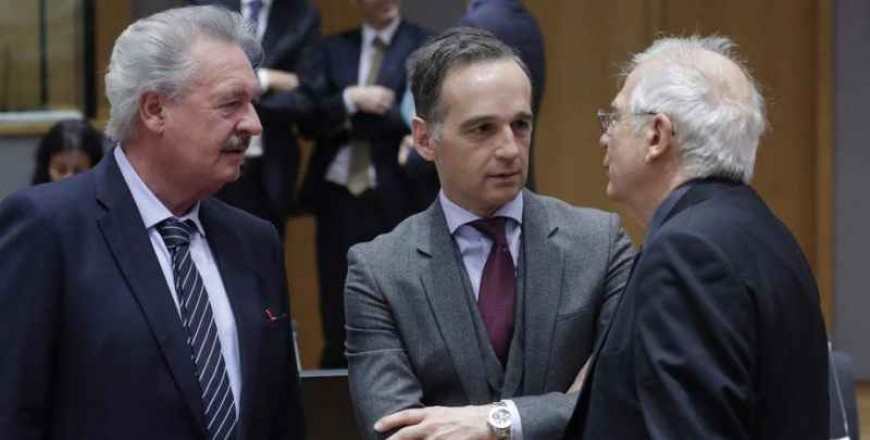
EU foreign ministers agreed on Monday (17 February), after Austria lifted its veto, to deploy a combined aerial and naval mission, with a terrestrial component, and enforce a porous UN arms embargo in and around war-torn Libya.
The decision – whose details will be finalised in the weeks ahead and agreed at the next EU foreign affairs meeting in March – came after weeks of fruitless negotiations and warnings by the EU’s chief diplomat, Josep Borrell, that the bloc risked “paralysis” in its foreign-policy making, potentially leaving Libya’s fate to Turkey and Russia.
“We agreed to launch a new operation in the Mediterranean, Operation Sophia will be closed,” Borrell said. “This new operation will have as a goal to implement the arms embargo imposed by the UN Security Council.”
Operation Sophia – whose aim was to prevent human trafficking in the Mediterranean – stopped deploying ships last March after Italy said it would no longer take migrants rescued at sea.
However, the new mission is expected to have aerial, satellite and maritime,’ elements rather than being a pure naval mission.
Initially, Borrell had hoped to revive Operation Sophia, with one compromise being to use aircraft, rather than ships, to monitor arms smugglers who supply Libya’s two rival governments.
On the sidelines of the Munich Security Conference last weekend, where participants at follow-up talks to the Berlin Libya Conference reaffirmed their commitment to secure the ceasefire, German Foreign Minister Heiko Maas, urged the EU to agree on a naval mission, saying overflights would not be enough.
UN deputy envoy for Libya, Stephanie Williams, said the truce in Libya is only hanging by a thread, and the economic situation is deteriorating. “The arms embargo has become a joke,” she said.
“In accordance with the agreed mandate, the mission will have a different area of operation than Operation Sophia, which previously was covering the whole Libyan coast,” Borrell told reporters.
“But if we want to secure the arms embargo, we have to concentrate our attention to the Eastern part of the Mediterranean, where the arms are coming from,” he said, adding that EU military staff will define the area of operation in accordance.
“The mission will also maintain another secondary support task, namely fighting organised crime responsible for migration and continued training of the Libyan coast guard and navy,” Borrell said.
The EU’s chief diplomat added that EU27 acknowledged “legitimate concerns” of some member states regarding the mission’s potential impact on migration flows and indicated this will be “carefully monitored and reported to the operation commander”.
However, EU foreign ministers agreed that should the EU consider that migrants appear near the mission’s field of operation with the goal of being rescued, the “maritime assets will be withdrawn from the relevant area,” Luxembourg’s foreign minister Jean Asselborn said.
In a compromise to assuage Austria’s concerns that any naval mission could help more migrants reach Europe, EU ships will hail and inspect suspicious vessels in the eastern Mediterranean, where most arms smuggling takes place, away from migrant routes.