

COVID-19: Worst is yet to come in conflict zones, UN chief warns
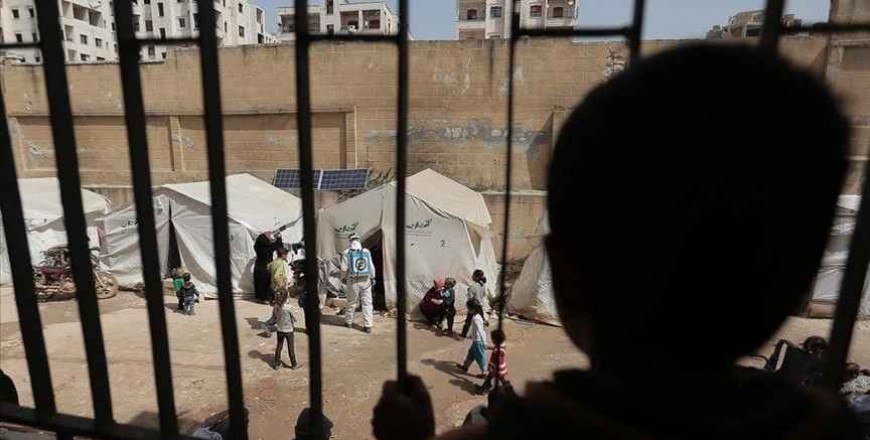
In countries stricken by conflict, where health systems have already collapsed, “the worst is yet to come” as the coronavirus continues to spread, UN Secretary-General Antonio Guterres warned on Friday (3 April), reiterating his call for a global ceasefire to help contain the COVID-19 pandemic.
n March, Guterres called for a global truce in the world’s conflict zones, asking warring parties worldwide to lay down arms in order to protect vulnerable civilians from the fallout of the coronavirus pandemic.
“In some conflicts, fighting has not stopped, it has gotten worse,” Guterres told reporters as he repeated his call.
he United Nations has been trying to mediate an end to conflicts in countries including Syria, Yemen and Libya, while also providing humanitarian assistance to millions of civilians.
Guterres specifically warned that in war-torn countries health systems have collapsed and the small number of remaining health professionals were often targeted in the fighting.
Syria has reported its first case of the COVID-19 virus, while more cases have emerged in the Democratic Republic of Congo and Afghanistan.
As the UN chief presented an update report, he said his call has so far been endorsed by a growing number of member states, some 70 so far, regional partners, non-state actors, civil society organisations and religious leaders.
According to him, “a substantial number of parties to conflicts” have expressed their agreement to a cessation of hostilities, notably in “Cameroon, the Central African Republic, Colombia, Libya, Burma, the Philippines, South Sudan, Sudan, Syria, Ukraine and Yemen”.
But while the “global ceasefire appeal is resonating across the world” and a substantial number of parties to conflict have expressed their acceptance for the call, Guterres warned that “there is a huge distance between declarations and deeds”.
In his ceasefire update, the UN chief specifically flagged four conflicts – Syria, Libya, Yemen and Afghanistan – where there is a struggle to make the intense diplomatic push successful.
In Yemen, despite expressed support for a ceasefire by the government, Ansar Allah and many other parties, the conflict has spiked, while in Syria, the Idlib ceasefire negotiated by Turkey and the Russian Federation is holding.
In Libya, the parties initially responded positively to calls for a humanitarian pause to tackle COVID-19, but the truce has not been holding and fighting has flared up in recent days.
“Clashes have escalated drastically on all frontlines obstructing efforts to effectively respond to COVID-19. I urge both parties — and all others directly and indirectly involved in the conflict — to join forces to address the COVID-19 threat, ensure unhindered access to humanitarian aid and realise the ceasefire they have been discussing under the auspices of the United Nations,” Guterres urged.
The EU announced this week it will launch its new maritime surveillance mission in the eastern Mediterranean, dubbed ‘Operation Irini’, to enforce a potential ceasefire in Libya and a UN arms embargo against the country’s warring parties.
However, it still needs to be determined which member states will contribute to the operation. Despite negotiations meant to be concluded this week, this process has not brought concrete commitments and has raised questions about when the mission will be ready to deploy, EU officials told EURACTIV.