

EU chief negotiator Michel Barnier criticises UK over lack of progress in Brexit talks
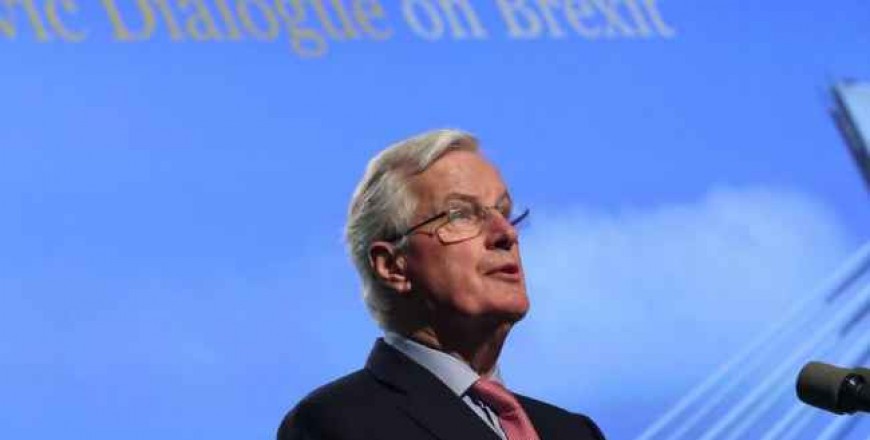
The U.K. cannot refuse to extend the Brexit transition period and at the same time slow down discussion on "important areas," EU chief negotiator Michel Barnier said at a press conference Friday after the second round of negotiations on a future EU-U.K. trade deal concluded.
Barnier said that there must be "parallel progress" on all subjects in the talks, especially given the limited timeframe in which to reach an agreement — the transition period ends on December 31.
He added that aim of "tangible progress" has only been "partially" met after this second round, which happened virtually. The two sides must decide by June 1 on whether enough progress has been made, or if an extension to the transition period is required.
Barnier mentioned four areas in particular "in which the progress this week was disappointing," stressing how important these are for the EU. These were: negotiations about a level playing field, the overall governance of the future partnership, the criminal and security partnership, and fisheries.
On fisheries, he said that "the EU will not any agree to any future economic partnership that does not include a balanced, sustainable and long-terms solution on fisheries. That should be crystal clear to the U.K."
"The clock is ticking," he added, and "barely eight months remain" to negotiate a future deal.
"We agreed with Boris Johnson to hold a high-level conference in June to take stock of the progress," Barnier said. "Before that, we have only two round of negotiations left in the weeks of 11th of May and the week of 1st of June. We must use these two rounds to make real tangible process across all areas, including all those I have just raised."
Barnier also said that the June meeting is when both sides will take stock on what real progress the U.K. has made for the implementation of the protocol on Northern Ireland. “We need clear evidence that the U.K. is advancing with the introduction of the agreed customs procedures for goods entering Northern Ireland. We need clear evidence U.K. will be able to carry out all necessary [standards] controls as well as other regulatory checks on goods entering Northern Ireland."
David Frost, British team head, later tweeted: “If we are to make progress now, we need to focus on agreeing a future relationship that has a comprehensive [free trade agreement] at its core, like those the EU has agreed elsewhere. We support high standards. But there is no need for novel and unprecedented ‘level playing field’ rules, for example tying us to EU laws, or a role for the EU court. What the EU proposes is unlike anything agreed in other such FTAs and we will not agree to it here.
“Finally, we are ready to work to agree a fisheries agreement which reflects our rights under international law to control our own waters, & provides for annual negotiations over access based on scientific principles. We won’t agree to continuing the Common Fisheries Policy.”