

President Erdoğan vowed to ramp up Turkey’s support for its ally in Libya
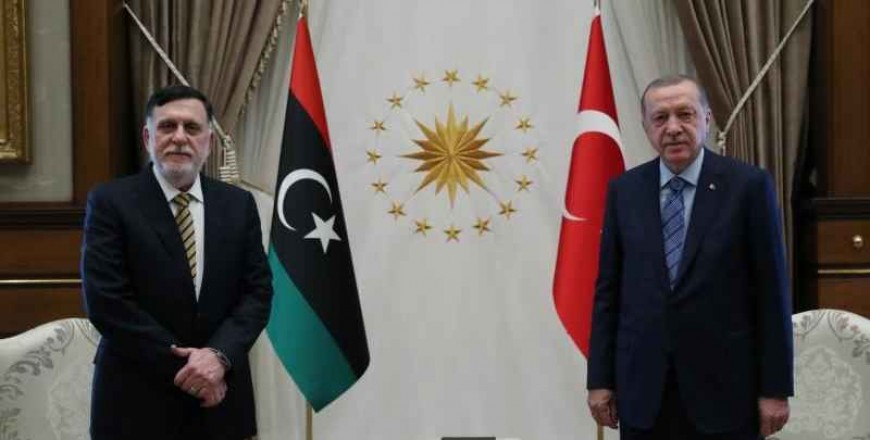
According to EURACTIV, President Recep Tayyip Erdoğan vowed on Thursday (4 June) to ramp up Turkey’s support for its ally in Libya to lock in recent military gains, and promised joint exploration for oil at sea following talks in Ankara ahead of a potential ceasefire push.
Fayez al Serraj, leader of Libya’s internationally recognised Government of National Accord (GNA), met Erdoğan for talks hours after his forces – backed by Turkey – said they regained full control of the capital Tripoli.
Turkey threw its support behind the GNA in November after signing a military cooperation pact alongside a maritime demarcation deal, which gives Ankara exploration rights in the eastern Mediterranean that Greece and others reject.
Turkey’s intervention in the conflict has pushed back Khalifa Haftar’s eastern-based Libyan National Army (LNA) – backed by the United Arab Emirates, Russia and Egypt – which had been attacking the GNA in Tripoli since April 2019.
The GNA’s latest advance could hasten steps toward a potential truce, underlining Turkey’s growing influence in the resource-rich region where Erdoğan has few close allies.
Turkey’s support for the GNA “will increasingly continue,” Erdoğan said alongside Serraj, adding that Hafter and his backers “will be judged by history.” A solution can only come under United Nations’ auspices, he said.
“We aim to expand our cooperation including exploration and drilling operations to take advantage of natural resources in the eastern Mediterranean,” including Libyan territory, Erdoğan added.
On Monday, the United Nations said both sides had agreed to resume ceasefire talks and warned that weapons and fighters being flown into Libya threatened a new escalation.
Several peacemaking efforts in Libya have collapsed or stalled since clashes began in 2014.
An increased presence in Libya would give Turkey strategic positioning near Egypt, with which ties are strained.
It would also serve as another foothold in the Mediterranean, where Turkey has been at odds with several neighbouring states. Greece and Cyprus called last year’s maritime deal with Serraj illegal, an accusation Ankara denied.