

US, Russia to resume ‘productive’ nuclear disarmament talks later this summer
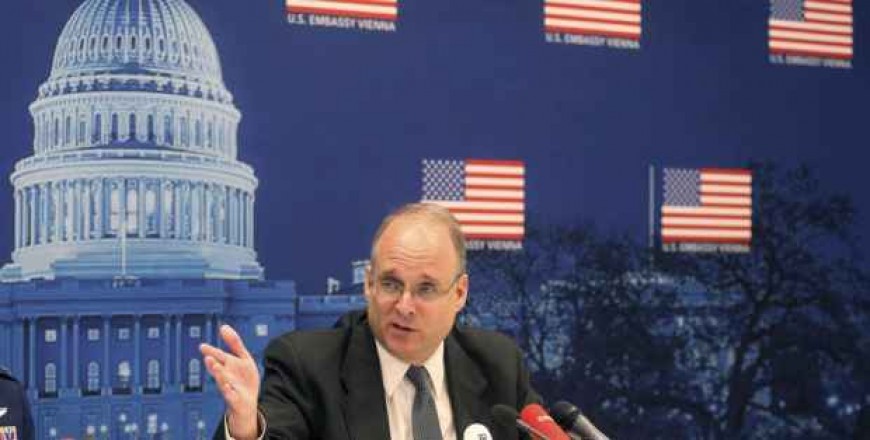
According to EURACTIV, Russia and the US hope to meet for a second round of nuclear disarmament talks as soon as possible, perhaps already in late July or early August, a US special envoy said after the first negotiating round on the future of the world’s two largest nuclear powers concluded in Vienna on Monday (22 June).
The talks are meant to replace New START, a landmark nuclear arms reduction treaty between the US and Russia which is set to expire next February.
Washington wants a wide-ranging treaty restricting all nuclear weapons, not just strategic ones, US Special Envoy for Arms Control, Marshall Billingslea, told a news conference on Tuesday after a day of “marathon discussions” with the Russian delegation, led by Deputy Foreign Minister Sergei Ryabkov.
According to him, talks were productive and there was “sufficient common ground” that the two sides agreed to set up multiple technical working groups.
Their progress will determine whether the second round of talks will take place, which could potentially be in late July or beginning of August.
Billingslea did not specify what the working groups would deal with.
“We’ve been very clear that simply perpetuating the Cold War construct of bilateral nuclear arms control in a rapidly proliferating world that has a third country racing towards parity will really no longer make sense,” Billingslea said, in a reference to China.
“What I would say is we have not made a decision one way or another,” Billingslea said when asked if New START would be extended.
Russia has offered to extend the accord, but the Trump administration has so far insisted that three-way nuclear arms treaty would include China because it says Beijing is secretly racing to increase its arsenal’s size and reach.
Diplomats and experts have warned that Trump’s insistence that China join the talks could obstruct the renewal of a crucial treaty and might even precipitate a new nuclear arms race.
Russia, however, said China joining was unrealistic. Moscow instead favours a multilateral agreement, possibly including France and Britain.
China, whose nuclear arsenal is a fraction of the size of those of the Cold War-era superpowers, has repeatedly declined to take part. A spokesman for the Chinese Foreign Ministry, Geng Shuang, said already in January that China has “no intention to participate” in such talks.