

NATO calls for ‘international response’ in Navalny case, but stops short of sanctions
According to EURACTIV, a special meeting of NATO ambassadors on Friday (4 September) condemned the poisoning of Russian opposition leader Alexei Navalny as an “unacceptable breach of international law” and announced “consultations on further steps regarding Russia”. It, however, stopped short of sanctions like in the 2018 Skripal case.
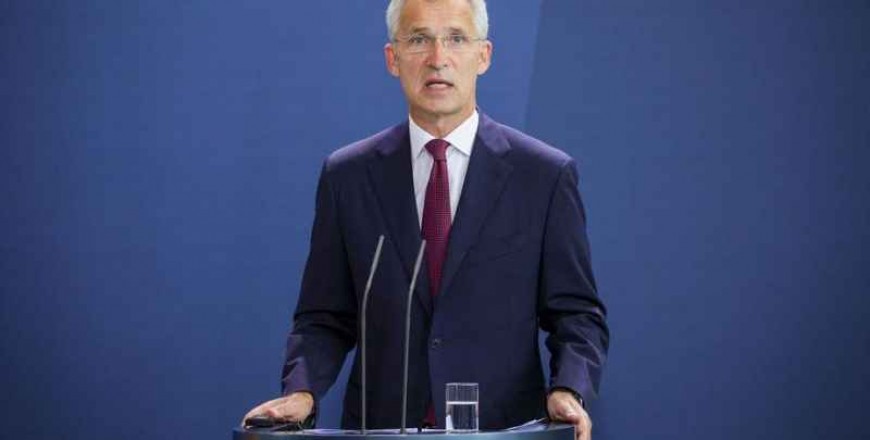
NATO chief Jens Stoltenberg described the poisoning as an “attack on fundamental democratic rights,” after a session where Germany briefed an extraordinary meeting of NATO ambassadors in Brussels.
“Any use of chemical weapons shows a total disrespect for human lives, and is an unacceptable breach of international norms and rules,” Stoltenberg told reporters in Brussels.
“It is not just an attack on an individual but it is also an attack on fundamental democratic rights,” Stoltenberg said, adding the Navalny case was “a blatant violation of international law and it requires an international response.”
However, the NATO chief did not specify what consequences that response might entail.
According to Stoltenberg, NATO members agreed that “Russia has now serious questions it must answer” and “must fully cooperate with the Organisation for the Prohibition of Chemical Weapons (OPCW) on an impartial international investigation”.
Western leaders have demanded answers from the Kremlin after Berlin earlier this week revealed “unequivocal evidence” that Navalny had been afflicted by the infamous Soviet-era nerve agent Novichok.
The same substance was used against Russian ex-double agent Sergei Skripal and his daughter in Salisbury, England in 2018, and Germany’s claim prompted widespread condemnation.
The Skripal case, considered the first offensive use of chemical weapons in Europe since World War II, had prompted NATO to cut the size of its Russian mission by a third from 30 to 20, removing accreditation from seven Russian accredited staff and rejecting three other pending applications