

Hungary's Orban Says Solutions To EU Budget Deadlock 'Possible'
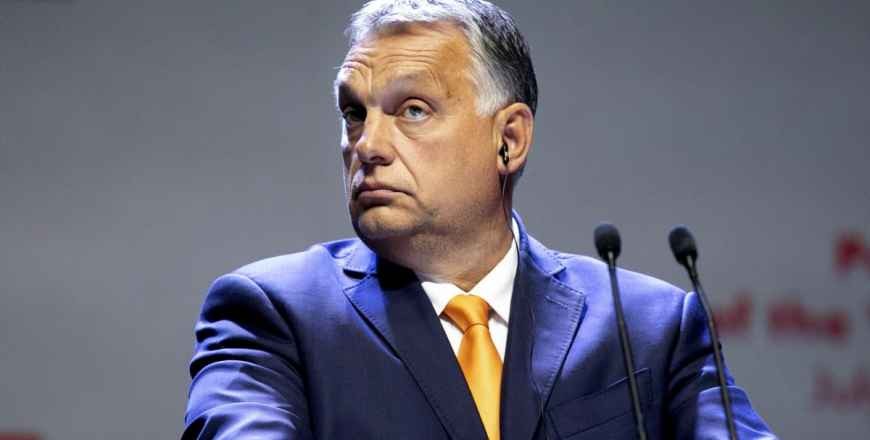
According to RFE/RL, Hungarian Prime Minister Viktor Orban says deadlocked EU budget negotiation will eventually reach an agreement despite vetoes by Hungary and Poland over the 27-member bloc's plan to make funding dependent on respect for the rule of law.
"Many kinds of solutions are possible, it's just a question of political will," Orban told public radio on November 20.
The EU's 1.8-trillion-euro ($2.13 trillion) long-term budget and coronavirus rescue package was vetoed on November 16 by the right-wing governments of Hungary and Poland, both of which have been singled out by the bloc for rolling back democratic freedoms.
The veto is likely to delay sorely needed EU funds at a time when the bloc is grappling with a second spike in coronavirus infections, with its economy likely to shrink in the last three months of the year in a double-dip recession.
Orban said that acceptable solutions for the two countries "would be those reached on the basis of legal aspects rather than the political majority." He gave no details.
Orban has claimed that the rule-of-law criteria for funding represent a politically motivated "weapon" that amounts to "blackmailing" EU members that oppose migration.
However, Orban, a staunch opponent of the bloc's schemes to resettle refugees in member countries, admitted that most EU countries are pro-migration and that the EU could force Hungary to take in migrants if a majority decides.
"At the center of all the blah-blah in Brussels is how they can force us to do something we don't want to do," said Orban.
"They want to do it in a way that, instead of via unanimity, these questions would be decided with a qualified, two-thirds majority," he said.
Orban said that, irrespective of the current political debate over EU funds, "all the development projects Hungary planned for the next 10 years will be carried out."
Hungary's economy, which has been largely dependent on EU funds, is in a deeper-than-expected recession due to the pandemic.
Both Hungary and Poland are under EU investigation for undermining the independence of the judiciary, media, and nongovernmental organizations, and they risk losing access to tens of billions of euros.