

US, Norway, Canada among first foreign countries to join EU military mobility project
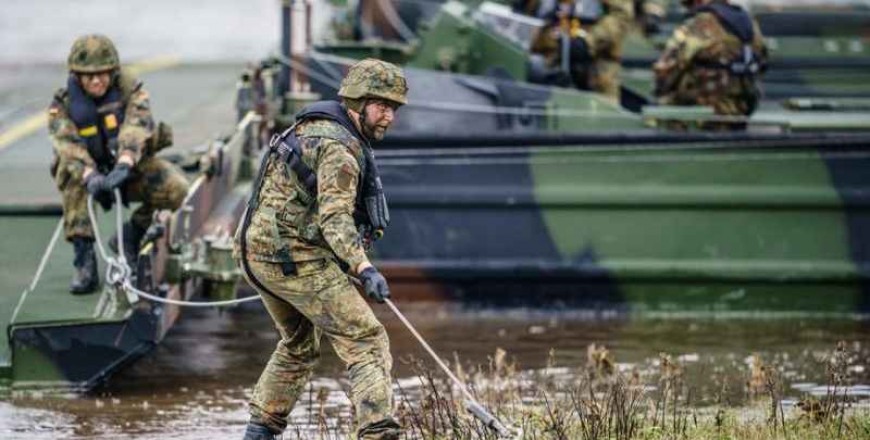
According to EURACTIV, EU defence ministers on Thursday (6 May) agreed to allow the United States, Norway and Canada to join the bloc’s project on military mobility, seen as the ‘silver bullet’ for EU-NATO defence cooperation and designed to ensure seamless movement of military equipment across the EU in response to crises.
“Their expertise will contribute to the project and, with it, to improving military mobility within and beyond the EU,” the bloc’s foreign policy chief and meeting chairman, Josep Borrell, said following the agreement.
“It will make EU defence more efficient and contribute to strengthening our security,” he added.
It’s the first time that the EU will allow outside countries to join its so-called Permanent Structured Cooperation (PESCO) framework of 46 military projects and is a sign of improving EU-NATO cooperation.
Formally established in December 2017, the PESCO framework was created with the intention to deepen defence cooperation among the 25 participating EU member states, help fund, develop and deploy armed forces together and make the EU’s defence sector more flexible and independent of the US.
It does not amount to a joint military force, but some EU members have raised fears of duplication and solo-runs.
Military mobility aims at improving the exchange of information between EU countries and cutting red tape at borders, including harmonising customs rules to allow for swift deployments and easier transport of military equipment, diplomats said.
More than 70,000 US military personnel are stationed in Europe, partly to help reassure Estonia, Latvia, Lithuania and Poland that they will be defended in case of aggression from Russia.
Canada is currently leading a NATO battlegroup stationed in the region, while Norway is considered as the key to security in Northern Europe, and especially the Arctic region.
With the decision, the three countries will join the Dutch-led project aimed at easing bureaucratic procedures that slow troop deployments considerably, whether by land, sea or air.
“We are very pleased (…) to welcome three important NATO countries to this EU project. I will send the official invitation letters soon,” Dutch Defence Minister Ank Bijleveld said in a statement.
“Currently, there are administrative and infrastructural barriers that make it difficult for military personnel and equipment to move through Europe. Often, it is easier for a tourist to travel through the EU than it is for military personnel,” she added.
The EU has designated €1.7 billion over the next seven years to help bolster the bloc’s military mobility” including by upgrading infrastructure like bridges, rail and roads.
A new dimension of the EU’s current Trans-European Transport Network (TEN-T) policy addresses the implementation and development of a Europe-wide network of railway lines, roads, inland waterways, maritime shipping routes, ports, airports and railroad terminals.