

Ukraine Says Russia Blocking Most Of Sea Of Azov
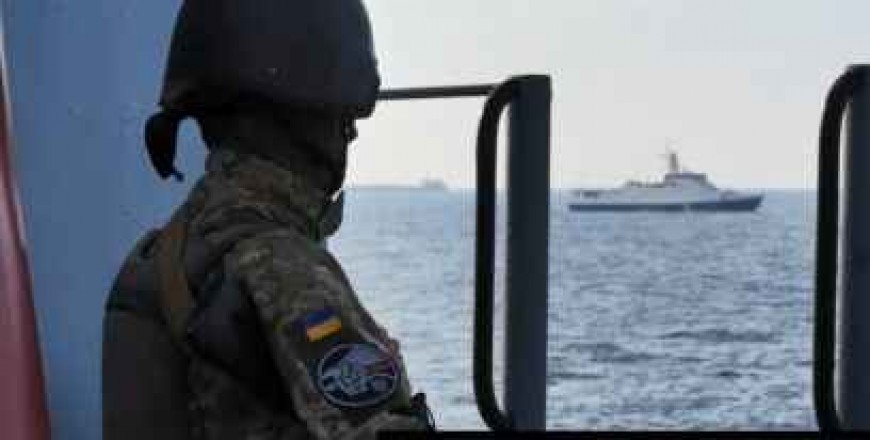
According to RFE/RL, Russia has blocked off nearly 70 percent of the Sea of Azov around the illegally annexed Crimean Peninsula, the Ukrainian Navy has announced.
“Currently, the Russians have issued navigation warnings on restrictions on navigation in certain areas, allegedly in connection with artillery fire in areas near Mariupol, Berdyansk and Henichesk," the Ukrainian Navy said in a statement issued on December 10.
The Russian side has so far neither confirmed nor denied the claims, which come amid heightened tensions and fears of a Russian invasion of Ukraine as it has massed tens of thousands of troops near the border with Ukraine and inside Crimea, which it seized from Ukraine in 2014, when it also began backing separatists in southeastern Ukraine, including militarily.
On December 9, Russia’s Federal Security Service said a Ukrainian vessel had headed toward the Kerch Strait without permission. Ukraine dismissed the Russian complaints as part of a Russian "information attack" on Kyiv.
The Sea of Azov is an internal sea with Russia to the east and Ukraine to the west. It is connected to the larger Black Sea by the Kerch Strait.
In November 2018, three Ukrainian military vessels were hijacked by the Russian border guard while trying to cross the strait. The 24 sailors were released only after months of negotiations.
U.S. intelligence assesses that Russia has at least 70,000 troops near Ukraine and could be planning a multifront offensive as early as next year involving up to 175,000 troops.
Russia denies it is planning to attack, claiming instead that Ukraine and NATO are provoking tensions. Moscow is demanding security guarantees against NATO’s expansion to Ukraine or deploying alliance troops and weapons there. Ukraine is not a member of the alliance but receives strong backing from members.
The Russian Foreign Ministry said on December 10 that Moscow is proposing a series of steps to reduce tensions, including holding military exercises at agreed limits from Russia-NATO borders and setting safe distances between their opposing warships and planes, especially in the Baltic and Black Seas.
Earlier, Deputy Foreign Minister Sergei Ryabkov warned the United States and its allies not to dismiss Russia's demands for legally binding security guarantees.
The European Union wants to stave off any possible invasion with the help of a concrete sanctions package, European Commission President Ursula von der Leyen said on December 10.
"Aggression must have a price tag," von der Leyen said on the sidelines of a meeting in Brussels with Olaf Scholz, the new chancellor of Germany.
"Therefore, we will communicate these points in advance in an appropriate form ... to Russia," von der Leyen said, adding further details would not be made public.