

EU's Borrell Says Iran Nuclear Talks Need Pause, Although Final Text Is Ready
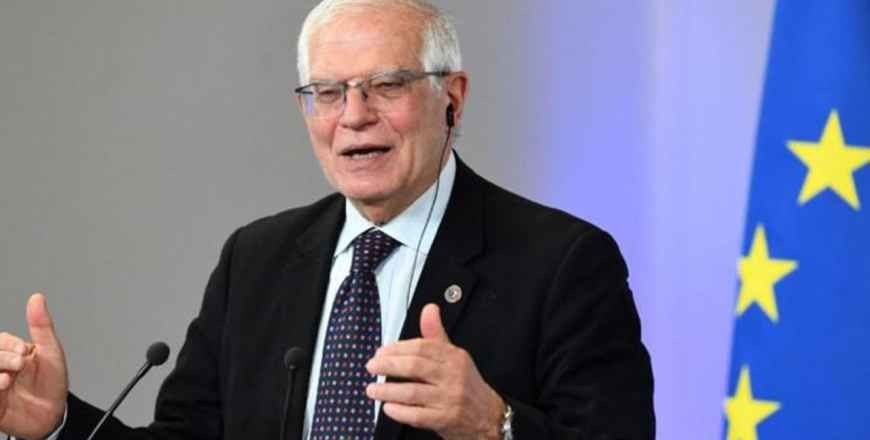
According to RFE/RL, The European Union's foreign policy chief says the final text of an agreement to revive a landmark nuclear accord between Iran and world powers is "essentially ready and on the table," but a pause is needed in the talks due to "external factors."
Moscow demanded guarantees last week that Western sanctions related to its invasion of Ukraine would not hamper economic and military relations between Iran and Russia.
The United States and European countries have rejected the idea, saying they have nothing to do with restoring the Joint Comprehensive Plan of Action (JCPOA), as the 2015 nuclear deal is officially known.
"As coordinator, I will, with my team, continue to be in touch with all JCPOA participants and the U.S. to overcome the current situation and to close the agreement," JosepBorrell said on Twitter on March 11.
Iranian Foreign Ministry spokesman SaeedKhatibzadeh said on Twitter that Tehran agreed that a pause could result in "momentum for resolving any remaining issue and a final return."
The head of the British delegation, Stephanie al-Qaq, said on Twitter that she was "deeply disappointed" at the pause in the talks.
The last-minute hitch must be resolved in the "next few days," she warned, or else the agreement was "likely to unravel."
A senior EU official told Reuters there were still two or three technical issues that needed to be resolved between Washington and Tehran but that those could be resolved quickly.
The unnamed official said the talks had to be paused to get a response from Moscow after it was told its demands, which went beyond its nuclear commitments, could not be met.
"They are thinking about that reaction, and in the meantime we cannot advance in the sense that we cannot finalize the negotiation," the official said.
U.S. State Department spokesman Ned Price said on March 10 that there were a few issues still to be resolved -- an indication that the Russian position is not the only stumbling block that still needs to be cleared out of the way.
Former President Donald Trump in 2018 pulled the United States out of the agreement that lifted most sanctions on Iran in exchange for the Islamic republic's curbing its nuclear activities. The U.S. move reimposed tough economic sanctions on Tehran, which has been violating some provisions of the deal, saying it was no longer applicable.
Talks to revive the deal have been held in fits and starts in Vienna since April, including representatives from China, France, Germany, Russia, Britain, the European Union, and Iran. The EU has served as a chief interlocutor between the U.S. and Iranian delegations following Tehran refusal to meet face-to-face with the Americans.