

G7 leaders agree on no new sanctions, want to close loopholes
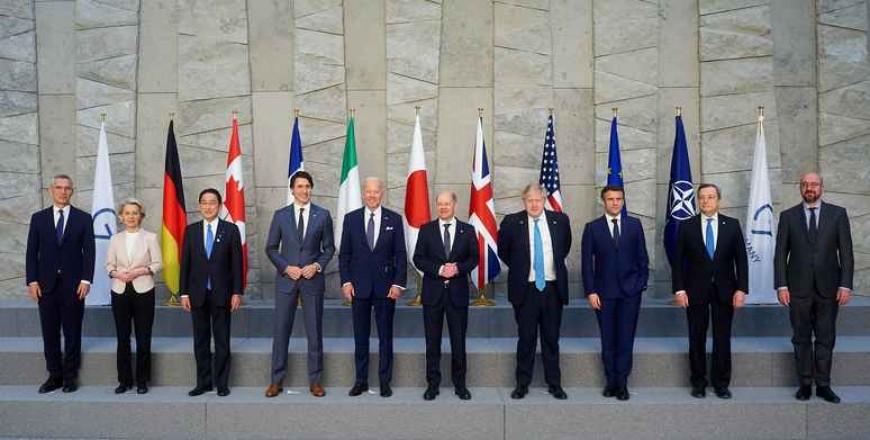
According to EURACTIV, Leaders of the world’s most developed nations agreed on Thursday (24 March) to work together on implementing the sanctions currently in force against Russia so that they cannot be circumvented through evasive actions by Russian entities, but did not agree on any new sanctions against Moscow.
Instead, the G7 leaders, meeting in Brussels between a NATO summit in the morning and a later EU summit, reiterated their condemnation of the Russian invasion of Ukraine and urged oil-producing countries to step up production and supply to international markets, perturbed by the war, Russia sanctions and rising energy prices.
Instead of a new set of sanctions, they said they want to focus on closer cooperation in implementing those already in place. “We have decided on a seamless implementation of the sanctions,” German Chancellor Olaf Scholz, who presides over the G7 this year, told a press conference after the summit.
Now that the sanctions have been in force for some weeks, some loopholes have become apparent.
For example, Russia’s central bank has been able to stabilise the ruble after an initial plunge even though a large part of its international reserves are frozen. The high commodities prices and the continued demand for Russian energy from Europe and the rest of the world helped to support the demand for the ruble.
Moreover, the central bank seems to still be able to use its gold reserves to stabilise the ruble, which the G7 leaders are trying to stop.
“We task the relevant ministers in a focused initiative to monitor the full implementation of sanctions and to coordinate responses related to evasive measures, including regarding gold transactions by the Central Bank of Russia,” said a statement agreed at the G7 summit.
The statement also said that G7 leaders would engage other governments in adopting similar restrictive measures.
While the G7 did not agree on additional measures, the US unilaterally added more Russian individuals to its sanctions list and also sanctioned Russian defence companies.
“I have perceived the G7 as a unit today,” Scholz said after the meeting. The German government is one of the biggest opponents of stricter sanctions that would also include Russian energy – on which its industry still heavily relies – and thus achieved to defend its position also within the G7.
The current EU line to not do anything that might substantially hurt the EU economy remains untouched.