

President Iohannis: “the geostrategic landscape in the Black Sea Extended Region is influenced by a series of current threats and challenges”
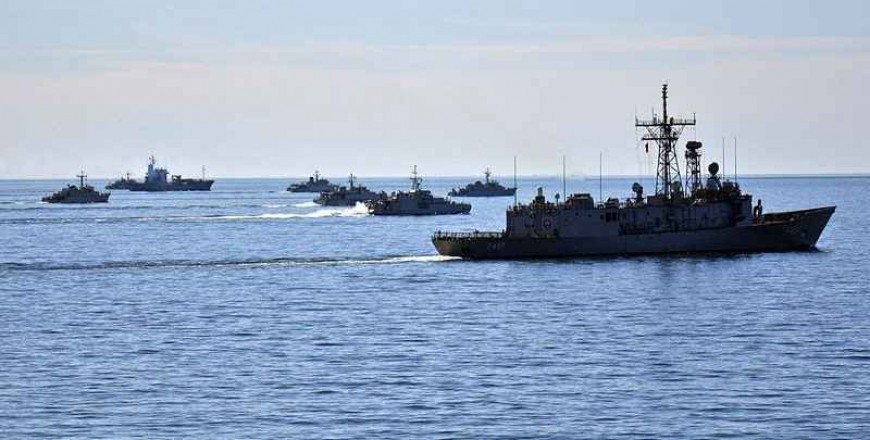
President of Romania, Mr. Klaus Iohannis, on Monday, 28 May, conveyed a message at the opening session of the 2018 edition of the Programme „Security in the Black Sea. Shared Challenges, Sustainable Future”. The message was presented by Mr. Mihai Şomordolea, State Adviser, Department of National Security – Secretary of the Supreme Council of National Defence.
The translated text of the message is displayed below:
„The Programme «Security in the Black Sea Region. Shared Challenges, Sustainable Future» this year, as well, proves to be an excellent analysis framework focusing on the dynamic of the situation peculiar to this region. It is an initiative that fosters exploring complex perspectives, as it is the result of academic cooperation between the Romanian Intelligence Service, via the «Mihai Viteazul» National Intelligence Academy, the Harvard University and the National Intelligence University in the United States of America, under the patronage of the President of Romania.
I salute the presence at this edition of participants from 16 states, representatives of the regional, European and Euro-Atlantic policy-makers, personalities of the academic world and of the civil society. The development of this progrmme confirms both the importance Romania attaches to this event and the increased interest in the region’s condition.
In the latest years, the actions of certain non-state entities and factors on the security environment have given the notions of national and global security two new attributes - complexity and interdependency. Furthermore, the transnational nature of several threats to security requires cooperation from the coastal states in the Black Sea region.
At present, the security situation in the Black Sea Extended Region is characterised by volatility and is marked by potential conflict, these trends being most likely persistent in short and medium term. The regional geostrategic landscape is also influenced by a series of current threats and challenges, such as international terrorism, hybrid war, some actors’ assertiveness, frozen conflicts, migration crisis, cyber and communications attacks.
This year’s edition of the «Security in the Black Sea Region. Shared Challenges, Sustainable Future» Programme is dedicated to debates on how this region can evolve, through acknowledging the conflict-making factors and identifying those opportunities to advance a vision of an enduring development of the whole region.
Romania reaffirms its objectives connected to stabilise the region through dialogue and peacefully sellting of disagreement. The regional cooperation is one of the main modalities to promote stability, economic growth and interconnectivity.
No country by itself has the power and resources to solve the complex issues the contemporary world is facing. Therefore, the solution of responding to the risks and threats to security globally, Europe-wide, as well as at the Black Sea region level, consists of intensifying international cooperation, based on the observance of the international law norms.
The main elements shaping Romania's strategic profile set the premises for an intensified regional cooperation and consist of our country's contributions to providing security, within the cooperation formats we are part in, of the endeavours to consolidate our own capabilities, as well as of assuming a constructive role, of regional and European linking agent.
At the same time, boosting the economic dimension of the regional collaboration can bring benefits to the countries in the region, as well as to other interested states. The Black Sea represents now, the same as in the past, a significant connecting bridge between Europe, the Middle East and Central Asia, with the possibility to capitalise on the Danube as a transit fairway to Central Europe, the Baltic Sea region and towards the Mediterranean Sea.
I am going on supporting the efforts to promote regional partnerships and initiatives meant to identify and efficiently approach the security challenges the Black Sea region is facing, taking into consideration that the European states are responsible for keeping the balance in this area.
In the latest years, the ideas brainstormed within your programme have brought a consistent contribution to systematic knowledge in the security field. I am convinced that the «Security in the Black Sea Region. Shared Challenges, Susutainable Future» Programme, also at this year’s edition, will be a good opportunity to communicate and tackle the regional issues, with the openness specific to the academic environment. I am also convinced that the conclusions you will reach to will prove their utility in integrating feasible solutions, able to increase resilience for our societies and to contribute to an increased expertise of the scholars in the field of the Black Sea region security”.