

Zelenskiy Urges EU Leaders To Show Strength Adopting In New Sanctions Against Russia
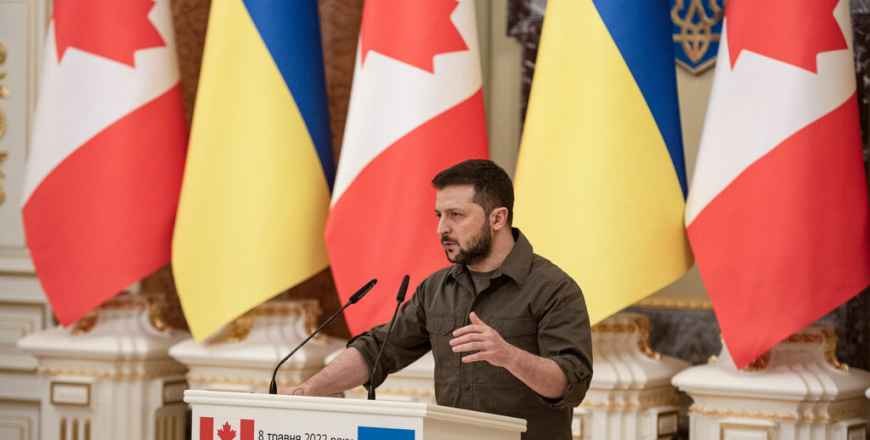
According to RFE/RL, Ukrainian President Volodymyr Zelenskiy has told EU leaders they must show strength as they work toward adopting a new set of sanctions against Russia, saying internal "quarrels" only benefit Moscow.
"Europe needs to show strength because Russia only sees strength as an argument," Zelenskiy said on May 30 in a speech to an EU summit intended to reinforce the bloc's support for Ukraine in its battle to defend itself against invading Russian forces.
Addressing the leaders from Kyiv, he said it was time for the EU not to be fragmented but "one whole," calling for a new set of sanctions against Russia, including a ban on Russian oil.
"The sixth package of sanctions must be agreed, including oil, so that Russia feels the price for what it is doing against Ukraine and the whole of Europe, and so that you finally become independent of Russia's energy weapons," he added.
EU divisions over Russian oil imports have slowed the adoption of a new sanctions package.
According to the latest draft of the summit's conclusions, the bloc's 27 leaders will agree that the next round of sanctions will include a temporary exemption for oil piped from Russia into the European Union.
The text, which has been obtained by RFE/RL and is subject to further revision, states that "the European Council agrees that the sixth package of sanctions against Russia will cover crude oil, as well as petroleum products, delivered from Russian into member states, with a temporary exception for crude oil delivered by pipelines."
Hungary, Slovakia, and the Czech Republic, which receive Russian oil via the 4,000-kilometer Druzhba pipeline, would continue to receive oil piped in from Russia for now, although those supplies would be sanctioned at some point.
The statement confirms that the EU states would agree to a broader proposal to ban the import of Russian oil delivered to the bloc by sea by the end of the year, and calls for "solidarity among member states in case of sudden interruptions of supply."