

Russia Says Sanctions Prevent It From Maintaining Gas Pipeline To Turkey, Balkans
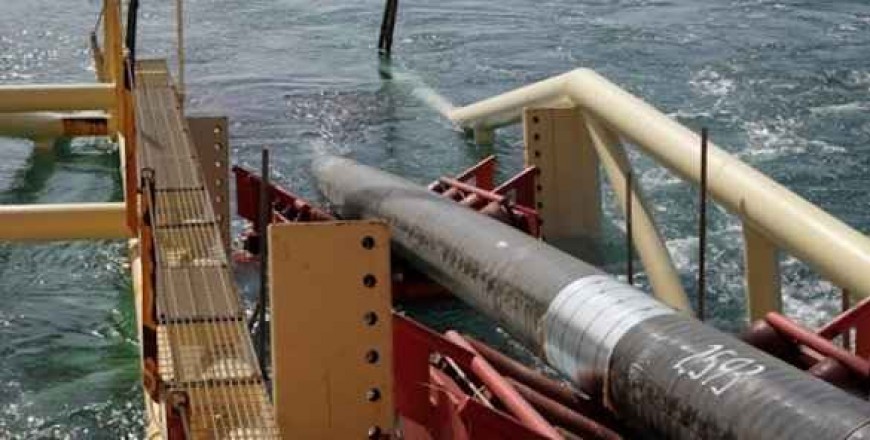
According to RFE/RL, Russia says Western sanctions are preventing it from maintaining a crucial natural-gas-export pipeline that supplies Turkey and the Balkans, potentially worsening Europe's energy crisis.
South Stream Transport B.V., the Dutch unit of Kremlin-controlled gas giant Gazprom responsible for serving the underwater pipeline to Turkey, said the Netherlands revoked its license as of September 17.
In a letter to managers of South Stream Transport B.V. on September 14 obtained by RFE/RL, company director Oleg Aksyutin ordered them to stop all work, including canceling contracts with Western suppliers.
"Suspend the execution of all contracts related to the technical support of the gas pipeline," he wrote in the letter, "including design, manufacture, assembly, testing, repair, maintenance, and training."
Dutch and Turkish officials did not immediately reply to a request for comment.
South Steam, which runs under the Black Sea to Turkey, has the capacity to deliver 33 billion cubic meters (bcm) of gas a year. Turkey consumes half of it and the remainder is destined for the Balkans and Central Europe, especially Serbia and Hungary.
South Stream lies 3 kilometers below the sea in waters with high seismic activity. Specialized ships regularly monitor the pipeline for damage and quickly make repairs. The equipment needed to monitor and repair the pipeline is largely imported from the West.
The call to end contracts means that "no one will be able to carry out repairs if a pipe is damaged, gas leaks, or if a part of the pipeline comes apart due to an earthquake. In fact, the company has lost operational control over the pipeline, the Russian branch has lost contact with the corporate center," a Russian source at South Stream Transport B.V. told RFE/RL.
Russia earlier this year cut exports through Nord Stream 1, its main gas pipeline to Europe, claiming Western sanctions impaired the ability to maintain the underwater pipeline in the Baltic Sea, driving EU gas prices to record highs. Last month, it completely cut exports along Nord Stream 1.
Earlier this week, explosions damaged the Nord Stream 1 and Nord Stream 2 pipelines. The EU and NATO called it "sabotage," with some EU officials accusing Russia of being behind the attack.
The Kremlin has denied any involvement and pointed the finger at the United States, an accusation that Washington immediately dismissed.