

EC Urges Turkey to Return to Compliance with the Migration Agreement
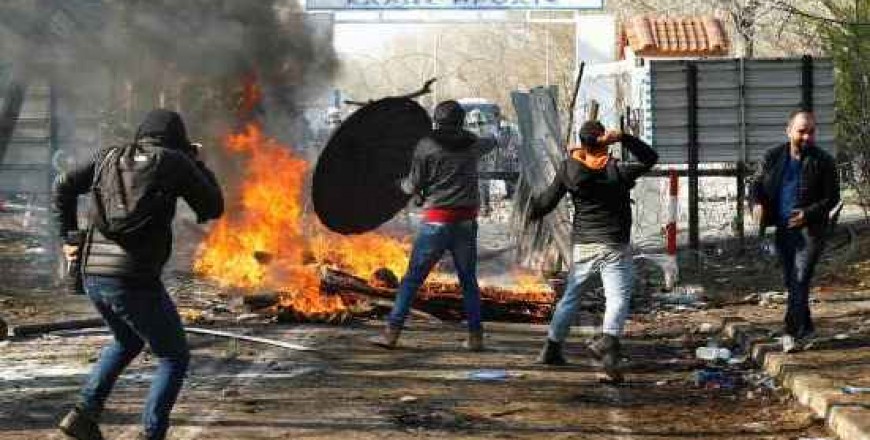
The European Commission has today called on Turkey to return to compliance with the bilateral migration agreement. Commission spokesmen declined to give a clear answer on whether Ankara violated Art. 3 of the agreement, which stipulates that Turkey will take all necessary steps to prevent the emergence of new roads to the EU by land and water for migrants.
The EU is in constant contact with the Turkish authorities, including at the highest level. "We are raising the issue of an increasing number of people at the border (with Greece) and the need to maintain the agreement, a spokesman for the commission said. He added that efforts have so far been aimed at dialogue with the Turkish authorities in order to continue full implementation of the agreement.
The spokesman said that € 3.2 billion of the planned six billion euros in aid to refugees sheltered from Turkey so far has been paid out of a total agreed allocation of 4.7 billion euros. He explained that the payments were made after checking the activities carried out on the spot. The spokesman again noted that these amounts were not intended for Turkish authorities but for those fleeing the battlefield.
In response to the movement of migrants and the additional danger of the spread of the COVID-19 virus, an EC spokesman said border guards should keep that in mind. One of the conditions for entry into the Schengen area is that the passenger does not pose a threat to public security, the spokesman added.
The EU’s border protection agency, Frontex, said it was on high alert and had deployed extra support to Greece, as the country’s prime minister, Kyriakos Mitsotakis, held a meeting of his national security council.
“We … have raised the alert level for all borders with Turkey to high,” a Frontex spokeswoman said. “We have received a request from Greece for additional support. We have already taken steps to redeploy to Greece technical equipment and additional officers.”.
In a televised address, Turkish President Erdogan said Turkey can no longer cope with the new wave of refugees. In search of a solution to the migration crisis for Bulgaria and the EU tonight, Prime Minister Boyko Borissov and Turkish President Recep Erdogan are meeting at a working dinner in Ankara on March 2.
Prior to his leaving to Ankara to meet Turkish President Recep Tayyip Erdogan, Prime Minister Borissov announced that he had spoken with a number of European leaders, the key to the talks being the need for a pan-European response and a balanced solution between solidarity and responsibility.
He told journalists that he wishes to continue the good and friendly neighbourly relations with Turkey and that his talks with Erdogan will focus on the opportunities for overcoming the tension caused by the increased migrant flow from Turkey to the EU in the last days and the measures for deescalating the tension in Syria.
Borissov proposed that centres be set up outside of the EU to immediately accommodate the migrants. The expenses will be covered by the Union, he specified.
During the meeting with the Turkish President, Borissov will also talk about the good bilateral relations and the opportunities to deepen them.
Turkish President Recep Tayyip Erdoğan has refused to attend a meeting with the Greek prime minister in Sofia on March 6 upon the initiative of Bulgarian Prime Minister Boyko Borisov after reports that the Greek police killed two Syrian refugees on the Turkish-Greek border.
Borisov on March 2 said that he suggested to host a trilateral summit in Sofia with the participation of Turkey and Greece, yet President Recep Tayyip Erdoğan turned down his offer after Greek police killed two refugees on the border. In the meantime, Erdoğan once again criticized the EU, accusing it of not fulfilling its commitments under the 2016 deal for migrants. He said that Turkey’s call for “fair burden and responsibility sharing” was left without a response. Underlining that Turkey has spent at least $40 billion for the care of Syrian migrants, refugees and asylum seekers, Erdoğan said that the EU also did not provide any financial help, as it pledged to, for the migrants. We do not want this money anymore. Turkey, which spent $40 billion, will find, produce and spend this money. No one has the right to play with Turkey’s honor,” he said. The president also slammed Greece, saying the fact that Greek police killed two migrants and heavily injured one has “negatively affected this process.”
The European Union’s foreign policy and security high representative, Josep Borrell, and its commissioner for crisis management, Janez Lenarcic, will hold talks in Turkey after the Turkish government decided to open its borders to Europe to refugees late last week.
“High Representative/Vice-President Josep Borrell and Commissioner for Crisis Management Janez Lenarčič will travel to Ankara from Tuesday, 3 March to Wednesday, 4 March 2020. They will hold talks on the ongoing escalation in the northwestern Syrian province of Idlib and the humanitarian consequences for the civilian population on the ground, as well as the situation of Syrian refugees in Turkey,” read a statement issued by the EU Commission on March 3.
The visit takes place ahead of the informal meeting of the EU foreign ministers (Gymnich) and the extraordinary Foreign Affairs Council to be chaired by Borrell in Zagreb later this week. Lenarčič, for his side, will continue his trip to Turkey by visiting the refugee facilities in Turkey’s southeastern province of Gaziantep, read the statement.
Migrants stranded at the Greek border on Evros attack Greek security forces The Greek government late on Monday defended its decision to stop processing asylum requests for a month after thousands of migrants converged in the border seeking to enter the EU from Turkey saying it is in response to “emergency and exceptional situations.” The United Nation’s refugee agency said earlier on Monday that Greece had no right to stop accepting asylum applications. “It is important that the authorities refrain from any measures that might increase the suffering of vulnerable people,” UNHCR said in a statement.
Greek Prime Minister Kyriakos Mitsotakis’ press office announced on Monday that the Greek Premier had shared a phone call with American President Donald Trump in which he briefed the American leader about the tense situation prevailing on the Greek-Turkish border. ”Prime Minister Kyriakos Mitsotakis spoke today with US President Donald Trump, and briefed him on the situation at the Greek-Turkish land and sea borders, stressing our country’s inalienable right to defend its borders,” the statement from the Premier’s office reads. ”President Trump has recognized Greece’s right to impose its legislation on its borders,” the official announcement concluded.