

New political decisions in Moscow
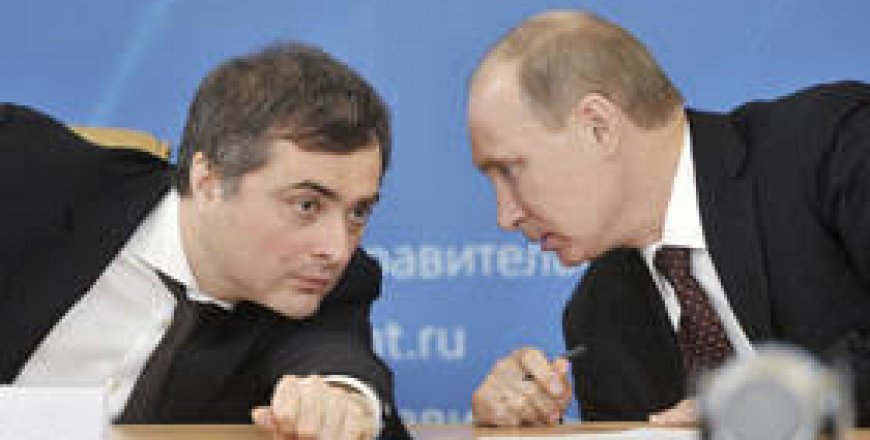
Kremlin aide Vladislav Surkov, long hailed as the eminence grise of the Putin regime, has reportedly resigned due to changes in the administration’s Ukraine strategy. Surkov’s resignation was reported on Telegram by a political analyst close to him. According to the analyst, Surkov has long wanted to leave the Kremlin due to its monotony, which he described as being a squirrel in a spinning wheel. Reports emerged in mid-2018 that Surkov planned to leave the administration over the impasse in eastern Ukraine and the unfulfillment of the Minsk agreements. Yet the Kremlin aide responsible for Russia’s Ukraine strategy prolonged his tenure. In response to reports of Surkov’s resignation on Friday, Kremlin spokesman Dmitry Peskov noted that Putin has signed no decree about Surkov leaving.
With Surkov’s depature, former deputy Prime Minister Dmitry Kozak, who was appointed deputy head of the presidential administration on Friday, will reportedly take over the Kremlin’s Ukraine policy. What does this mean for Russia’s approach to Ukraine? There are some key differences between Surkov and Kozak that bode well for conflict resolution.
First, Surkov, who masterminded the model of the self-proclaimed Luhansk and Donetsk People’s Republics, is reviled by the Ukrainian government. He believes the LNR and DNR should have wide-ranging autonomy from Kyiv and fall within Russia’s exclusive sphere of influence—a non-starter for Ukrainian negotiators. Kozak, on the other hand, is seen as a much more constructive negotiation partner in Kyiv. Over the past year, he helped negotiate the prisoner exchange and gas transit deal with Ukraine.
Another key difference is how Surkov and Kozak view U.S. sanctions. Surkov believes that Western sanctions over Russia’s actions in Ukraine are here to stay, making compromise with Ukraine worthless. Kozak, on the other hand, believes that the conflict in Ukraine diverts resources and prevents Moscow from normalizing relations with the West.
However, Surkov’s resignation does not suggest that a breakthrough in conflict resolution is around the corner. While Kozak is ready to negotiate with his Ukrainian counterparts, there must be high-level political will for him to accomplish anything. Questions on the status of the Donbas and control over the Russian-Ukrainian border remain unresolved, and there have been no indications that Putin is willing to make concessions on these issues.
The Kremlin has denied reports that a longtime key aide to President Vladimir Putin is stepping down.
The resignation of Vladislav Surkov was reported by Aleksei Chesnakov, an adviser to Surkov and director of Moscow's Center for Political Studies.
In a Twitter post on January 25 on Twitter, Chesnakov said Surkov was resigning due to what he called a "change of course on Ukraine."
However, Kremlin spokesman Dmitry Peskov said there is no decree yet on Surkov's resignation. He also told Russian media that there had been no change in Kremlin policy on Ukraine.
"As for the alleged change in the policy on the situation in Ukraine, this has nothing to do with reality and reflects only a personal viewpoint of the person who speaks about that," Peskov told the TASS news agency.
Surkov has played a leading Russian role in negotiations on ending the conflict in eastern Ukraine, where more than 13,000 people have died in fighting between Russia-backed separatists and Ukrainian government forces since April 2014. Hostilities erupted there shortly after Russia annexed Ukraine's Crimean Peninsula.
Widely known as the Kremlin's "gray cardinal," Surkov helped craft the Kremlin's domination of domestic politics and Russia's expansionist policies in Ukraine and elsewhere in the former Soviet space.
Surkov also helped build what is known as "sovereign democracy" and, as Putin's top political aide, concentrate power in the president's hands during his first two presidential terms between 2000 and 2008.
He was pushed from the Kremlin in 2011, after street protests against the system he helped create, and spent a year in government as a deputy prime minister before quitting in May 2013 after a dispute with investigators looking into suspected fraud.
In September 2013, Putin appointed Surkov as an aide, just four months after he quit the government.
He also serves as an adviser to Putin on aid to the Moscow-backed breakaway Georgian regions of Abkhazia and South Ossetia, which Russia recognized as independent after a short war in 2008 with Georgia.