

EU and Western Balkan leaders reaffirm ties in veiled response to China, Russia
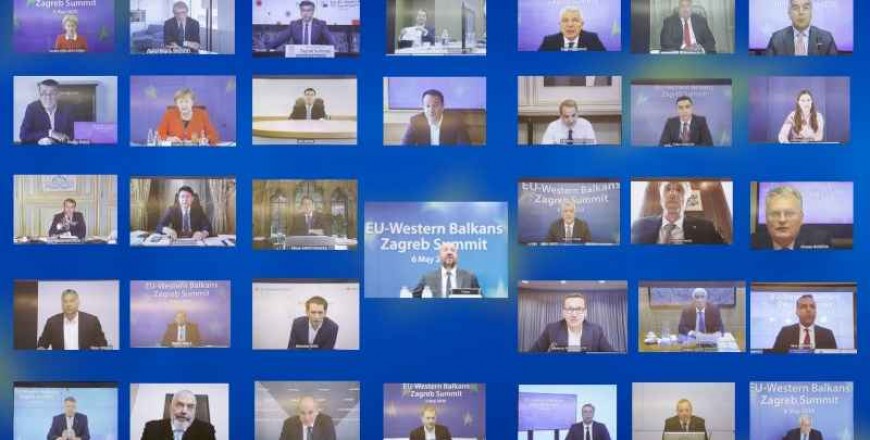
According to Euractiv, EU leaders confirmed their “unequivocal support for the European perspective” to their Western Balkans counterparts during a video-summit on Wednesday (6 May). However, the final declaration doesn’t make reference to a tangible time frame for the region’s accession to the bloc.
In fact, while many in the Balkans bear high hopes of joining the EU, the summit might have left them disappointed. Accession negotiations, some of which have been going on for years, were not mentioned.
In March, North Macedonia and Albania had won approval to start EU membership talks after a two-year delay, helping to counter a sense in the region that hopes of joining the bloc were fading. To add to the problems, five EU countries do not recognise Kosovo’s independence, including Spain.
The final declaration, despite previous criticism, left out the words ‘enlargement’ and ‘accession’ altogether, instead focusing on the cooperation in the wake of the COVID-19 pandemic as well as the need for continued reforms, especially on rule of law, fight against corruption and free media.
Speaking after the summit, Croatian Prime Minister Andrej Plenković played down the dissent, pledging that his country is a strong supporter of the region’s European future.
“In our view, these decisions were long overdue. We have also managed to adopt new methodology which will not only help Serbia and Montenegro, who already started negotiations, but also North Macedonia and Albania”, Plenković said. He added that Bosnia and Herzegovina, in Croatia’s view, deserves the status of the candidate country.
“We have reaffirmed and reconfirmed the position of the European perspective for the Western Balkans. It is important to continue the reforms, the rule of law, the democratic values, the fight against corruption – they are essential”, European Council President Charles Michel told reporters.
But while the summit, initially planned as the high point of Croatia’s EU presidency in Zagreb, was intended to give hope to all six enlargement hopefuls, the response to the COVID-19 disease dominated discussions.
EU chiefs promised a “robust economic and investment plan for the region” in their final declaration, but in clear terms also called for greater appreciation of its previous crisis support.
The Commission put down a €3.3 billion support package to help Western Balkans tackle the COVID-19 crisis, which includes a €1.7 billion package of assistance from the European Investment Bank and an additional €750 million of so-called “macro-financial assistance” designed to improve the macroeconomic stability of countries.
“Once we put behind us this immediate phase of the pandemic, EU will present the investment plan later this year – it will focus on necessary transport and energy infrastructure, but also Green New Deal and digitalisation”, Von der Leyen told reporters.
The leaders’ statement also demanded Balkan countries to follow EU foreign policy objectives, a veiled reference to concerns about countries aligning themselves too closely to Russia and China, which the EU says does not offer the same path towards becoming prosperous democracies.
“The EU reiterates its calls on all partners to progress towards full alignment with EU foreign policy positions, notably on issues where major common interests are at stake, and to act accordingly,” the summit declaration said.