

Poziția Uniunii Europene și a României față de situația din Siria și criza umanitară de la granița turco-elenă
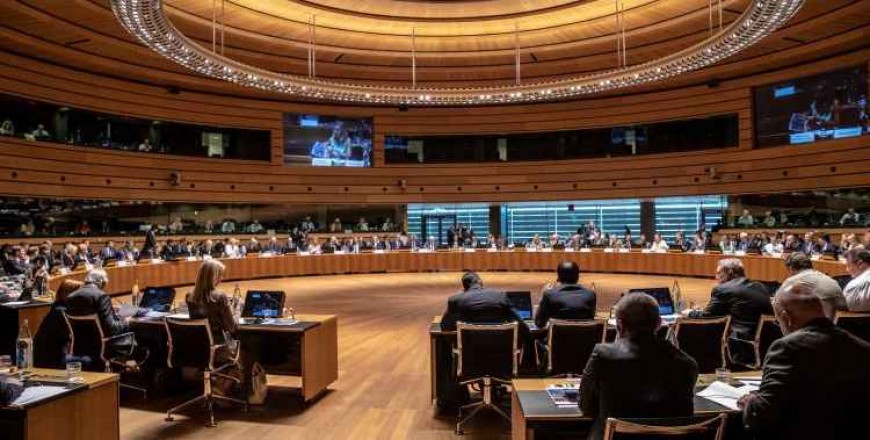
Astăzi a avut loc reuniunea extraordinară a Consiliului Afaceri Externe al Uniunii Europene (Zagreb, 6 martie 2020).
Agenda reuniunii a inclus un schimb de evaluări cu privire la recentele evoluții pe tema Siria/Turcia, în contextul deteriorării dramatice a situației de securitate și umanitare din regiunea Idlib din Siria.
Din partea României a participat ministrul afacerilor externe, Bogdan Aurescu.
Ministrul afacerilor externe Bogdan Aurescu a reiterat apelul la dezescaladarea imediată a situației din Idlib și la punerea în aplicare a unei încetări durabile a focului. ”Nu există soluţie militară la conflictul din Siria. Singurul răspuns viabil este identificarea unei soluţii politice”, a declarat șeful diplomației române, care a subliniat că trebuie evitată situația în care criza actuală să se transforme într-una regională.
De asemenea, ministrul Bogdan Aurescu s-a referit la situaţia umanitară şi de securitate extrem de îngrijorătoare din Siria şi s-a pronunţat în favoarea continuării sprijinului UE pentru ameliorarea crizei umanitare.
Ministrul afacerilor externe a subliniat faptul că „mai mult ca oricând, este necesar să dăm dovadă de solidaritate cu țările afectate, în special cu Grecia, statul membru UE cel mai afectat.” și a subliniat importanța respectării acordului dintre UE și Turcia din 2016.
Miniștrii au adoptat în cadrul reuniunii o declarație comună prin care au reiterat, printre altele, apelul către toate părţile în vederea dezescaladării situației de conflict armat din provincia Idlib, sens în care au subliniat necesitatea încetării imediate a focului, a garantării protecției civililor și a permiterii acordării asistenței umanitare în mod neîngrădit.
Textul integral al declarației:
“Statement of the Foreign Affairs Council
The EU Ministers of Foreign Affairs met today for an extraordinary Council meeting to discuss the crisis in Idlib and the situation at the EU external borders with Turkey.
While acknowledging the increased migratory burden and risks Turkey is facing on its territory and the substantial efforts it has made in hosting 3,7 million migrants and refugees, the EU reiterates its serious concern over the situation at the Greek-Turkish border and strongly rejects Turkey's use of migratory pressure for political purposes. This situation at the EU external border is not acceptable. The EU and its Member States remain determined to effectively protect EU's external borders. Illegal crossings will not be tolerated. In this regard, the EU and its Member States will take all necessary measures, in accordance with EU and international law. Migrants should not be encouraged to attempt illegal crossings by land or sea. The Council calls on the Turkish government and all actors and organisations on the ground to relay this message and counter the dissemination of false information.
The EU also reiterates its full solidarity with Greece, which faces an unprecedented situation, as well as with Bulgaria, Cyprus and other Member States, which might be similarly affected, including in efforts to manage the EU's external borders. The Council welcomes the practical support announced by the Commission on 4 March 2020. Close cooperation will also continue with the Western Balkans partners in this respect.
The Council recalls that it expects Turkey to implement fully the provisions of the 2016 Joint Statement with regard to all Member States. This Statement produces tangible results, including by supporting Turkey's significant efforts in hosting migrants and refugees. Both the EU and Turkey stand to benefit from the continuation of this cooperation and commitment.
In Idlib, the recent and continuing offensive by the Syrian regime and its backers, including Russia, is creating untold human suffering and has provoked the worst humanitarian crisis since the beginning of the Syrian conflict.
The Council calls for an urgent de-escalation of the conflict in Syria in order to avert a slide into international military confrontation, and prevent further suffering. The Council deplores the loss of lives. The Council also acknowledges the difficult situation Turkey is facing due to the offensive in Idlib and its consequences.
These messages are being delivered to all key parties. The EU is liaising with other international partners, including the UN, NATO and the US, so that the clear international consensus in favour of a de-escalation and a lasting ceasefire is strongly reinforced.
The Council notes the outcome of the Russia-Turkey meeting yesterday in Moscow and reiterates, in the strongest possible terms, its call on all parties to keep in place an immediate and a sustainable ceasefire, to guarantee the protection of civilians on the ground and from the air and to enable the unhindered delivery of humanitarian assistance by the international community.
While the European Union recognises the presence of UN-designated terrorist groups in the region, indiscriminate attacks and the destruction of civilian infrastructure including health facilities, schools and settlements for displaced persons by the Syrian regime and its allies cannot be justified under any circumstances and must stop. We reiterate the EU position that all the perpetrators of war crimes and crimes against humanity should be held accountable.
The Council urges the Syrian regime to return to the negotiating table and repeats that any sustainable solution to the conflict requires a genuine political transition in line with UNSCR 2254 and the 2012 Geneva Communique negotiated by the Syrian parties within the UN-led Geneva process and remains committed to the unity, sovereignty and territorial integrity of the Syrian state. The EU will actively promote a renewed, concerted effort of the international community in order to address the Syrian crisis and pave the way for a political solution.
The EU is addressing as a matter of priority the humanitarian situation. The European Commission is mobilising a further €60m in humanitarian assistance for north-west Syria, including in border areas and is committed to increase its assistance to the civilian population in north west Syria. Deliveries of humanitarian assistance are being made to address the emergency needs for shelter, medical and food support of some one million persons displaced in the past weeks, and of all other Syrians in need in the Idlib region. Safe, sustained and immediate access to populations in need must continue to be enabled, in full compliance with international humanitarian law. The EU strongly calls for the extension of UNSCR 2165 for cross-border access in order to ensure that humanitarian assistance, including medical and surgical supplies, reaches people in need throughout Syria through the most direct routes”.